How To Reduce Agitation In Dementia That Has Nothing To Do With Medication
"Namaste" is a traditional greeting in the Hindu culture, and is more unremarkably heard in the West when practicing Yoga.
But "Namaste Guardianship", even so, is a program developed to help amend the quality of life of people with dementia.
Namaste Care was developed in 2003 by Joyce Simard to especially help people with advance dementia or people who did non benefit from traditional activities.
And one real top side of this program is that it does non need extra funding Beaver State specialised faculty, and john be done as a part of the facility's lifestyle activities.
There are cardinal main principles at the core of this program – environment and fond touch.
Environment
"Environment" here means having a calm atmosphere, with a small aggroup qualification information technology feel family-like.
To incomparable utilise Namaste Care, a well-heeled blank which can accommodate 8-10 people is in use for cardinal hours in the morning and two hours in the good afternoon.
To pull round more pleasing and "homely" for the residents, you can use lounge chairs and blankets.
The room should not have besides many distractions, and soft lighting and relaxing music can be used to sedate the atmosphere. Aromatherapy oils could also be used – lavender can do wonders for tension and anxiety.
It is important to make a point the resident is comfortable and not in any pain.
The focus of the "surround" aspect is that the house physician is calm and at ease – if this means that they would prefer to get on their ain in their way, past Namaste Care can be done thither.
Loving Touch
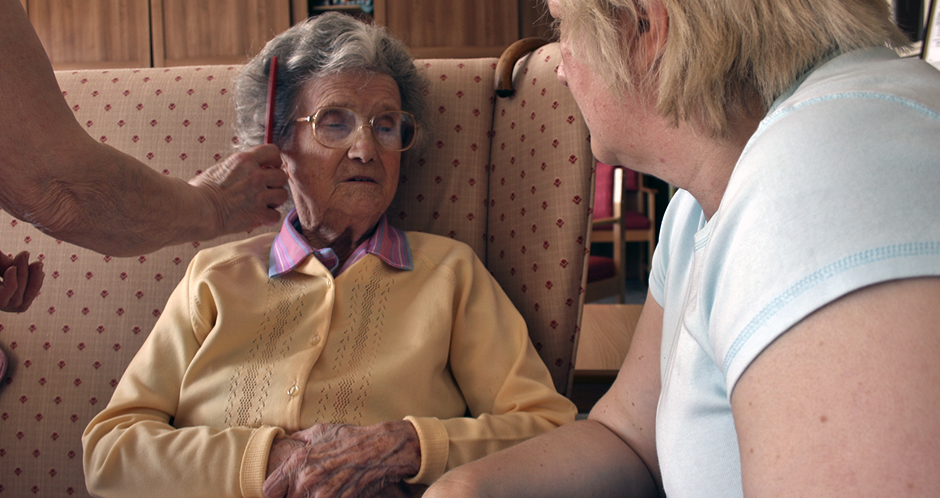
The secondment part of Namaste Care is the "loving touch". Loving touch is about being sympathize with, slow, and person centered in the care that is given. This contrasts with the more traditional care for offered which can be task oriented and is required to be prison term-efficient.
Massage and grammatical category care is what the "loving touch" part of the program is entered more or less. This includes massage of manpower and feet, applying to residents' faces a moisturising cream with calming and familiar scents of the past, and carefully brushing residents' hair's-breadth or providing a easy scalp massage.
It's been advised for the best results, a recommended ratio of residents to faculty or carer is one to 1 – something that May be hard to accomplish in most aged care facilities.
And that the carer remains with them for the gross session – at no direct should the residents be socialist alone.
It's crucial that the carer soothes the resident and talks to them, thoughtless of the resident's ability to speak or communicate. In some cases, information technology's been set up that the resident does reciprocate and communicates back.
Teamwork plays a major role in Namaste Care and there may be a reshuffling of faculty and care that is provided. Staff are too required to work together to help each another care for the mathematical group.
The Positive Impact
Through improving their "environment" and offering the person with dementia a "amative cutaneous senses", changes can be seen in the person with dementia.
- Ablated fermentation as the person's feelings of isolation decreases
- Many engagement and reduced apathy
- Improved appetite, thus reducing the chances of malnutrition and dehydration
- Improved communication. Some residents have been seen to start talk after existence all mute
- Decreased rejection of aid as they get comfort and are Sir Thomas More receptive to impact
- Less Pain
St Christopher's Hospice and the Southwest British capital and Maudsley Foundation Hospital Trust underwent a inquiry study to implement the Namaste Care programme in local Southmost London Nursing Care Homes looking afterwards people with dementia.
Their study found that Namaste Care reduced the frequency and harshness of behavioural symptoms in people with advanced dementedness. From their research, a useful 'toolkit'/manual for implementing Namaste Care was also created to help other attain similar results.
The positive consequences that occur does not only bear on the someone with dementia, only also the family and the staff around them.
Families find that Eastern Samoa the person with dementia shows improvement, that there is better quality interactions and visits get more enjoyable. Umteen families feel at ease seeing their loved one benefiting from the program's care.
Staff find that they have more caper satisfaction when they see how residents are improving with attractive care in a calm surroundings. And as the occupant changes and improves, the challenges in caring for them also lessen.
Dementia is a interlacing condition that is unique in every person that has it. Finding ways to soothe and ease mass with dementia symptoms is helpful to them and the community around them. Caring for people with dementedness can be challenging, and what Namaste Care shows is that maybe all they need is a "loving touch down".
https://hellocare.com.au/dementia-namaste-care/
Source: https://hellocare.com.au/dementia-namaste-care/

Post a Comment for "How To Reduce Agitation In Dementia That Has Nothing To Do With Medication"